Visto
Ad Platform
Visto is an all-in-one platform that unifies the fragmented programmatic advertising ecosystem, helping Ad Ops teams identify the most efficient path from planning to delivery.
In a highly competitive digital ad market, Ad Ops teams often juggle 18+ credentials across multiple buying and serving platforms. Visto addresses this complexity by consolidating core buying tools into a single experience and providing real-time performance visibility, reducing operational friction and enabling faster, more informed optimization.
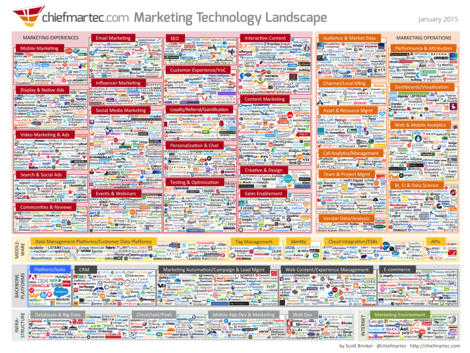
The Ad Space
As a founding designer, I led the end-to-end experience, from mapping the user journey to concepting and designing core solutions that established the foundation for the platform.
Ad creation workflow
Challenges
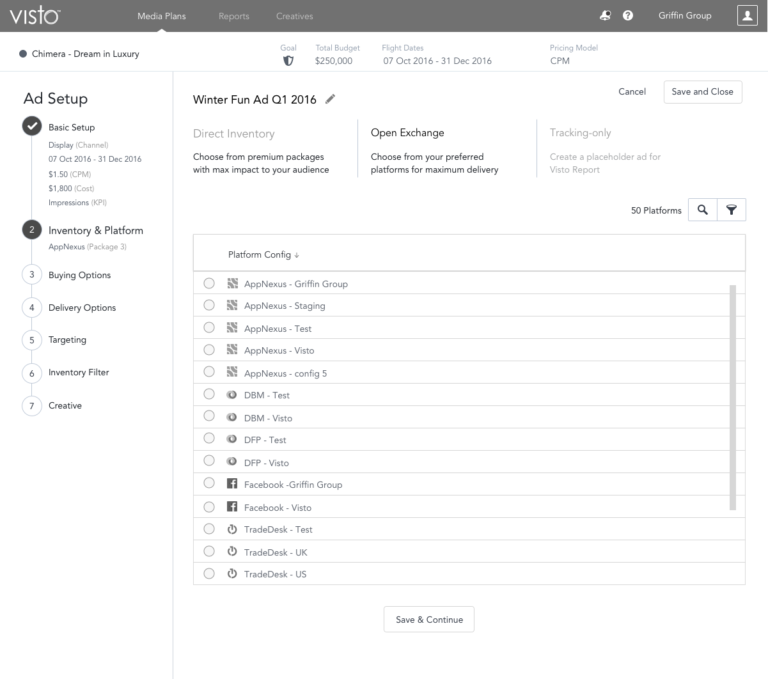
Ad creation varied significantly across buying platforms, each with its own configuration model, constraints, and technical terminology. This fragmentation forced Ad Ops teams to relearn workflows and navigate dense, platform-specific jargon, increasing cognitive load and slowing execution.
The core challenge was to balance simplicity and flexibility:
How could we unify the most common ad creation requirements into a single, streamlined flow?
How could we surface platform-specific settings without overwhelming users who didn’t need that level of control?
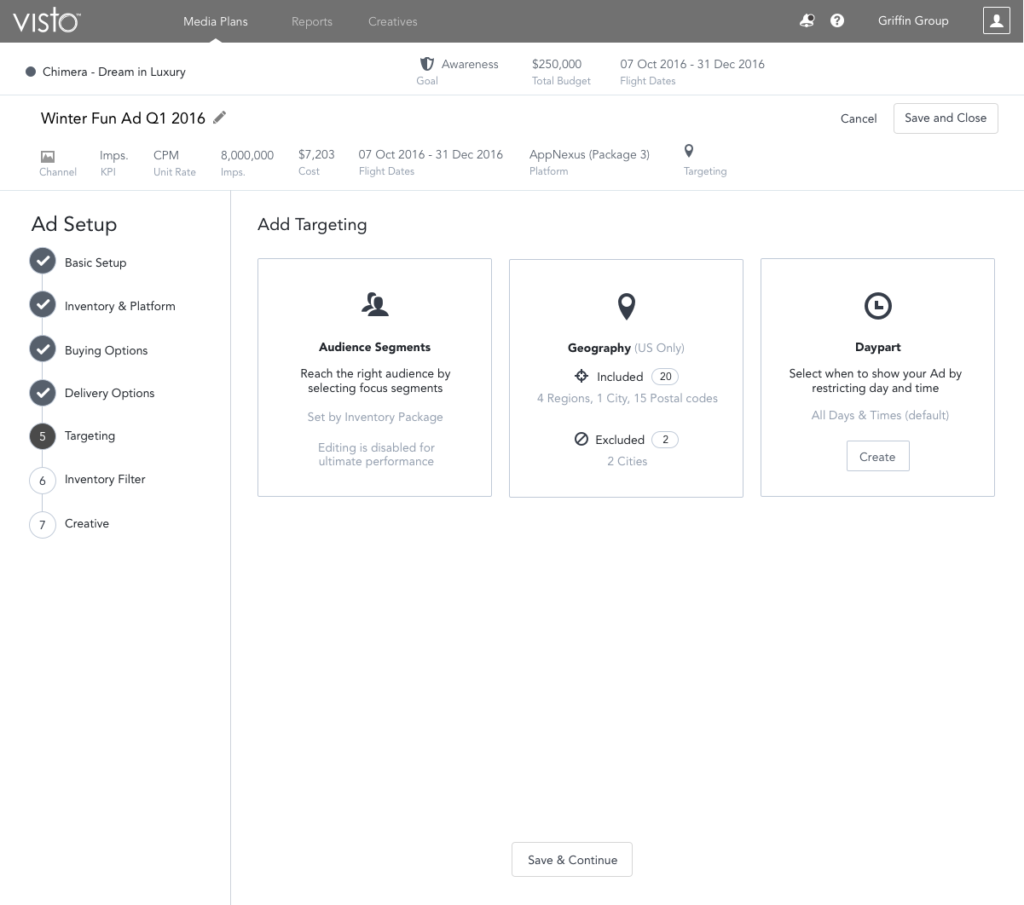
Solving this required identifying shared patterns across platforms, standardizing defaults for the majority use case, and designing progressive disclosure for advanced, platform-specific configurations, ensuring power when needed without sacrificing clarity.
Step by step workflow
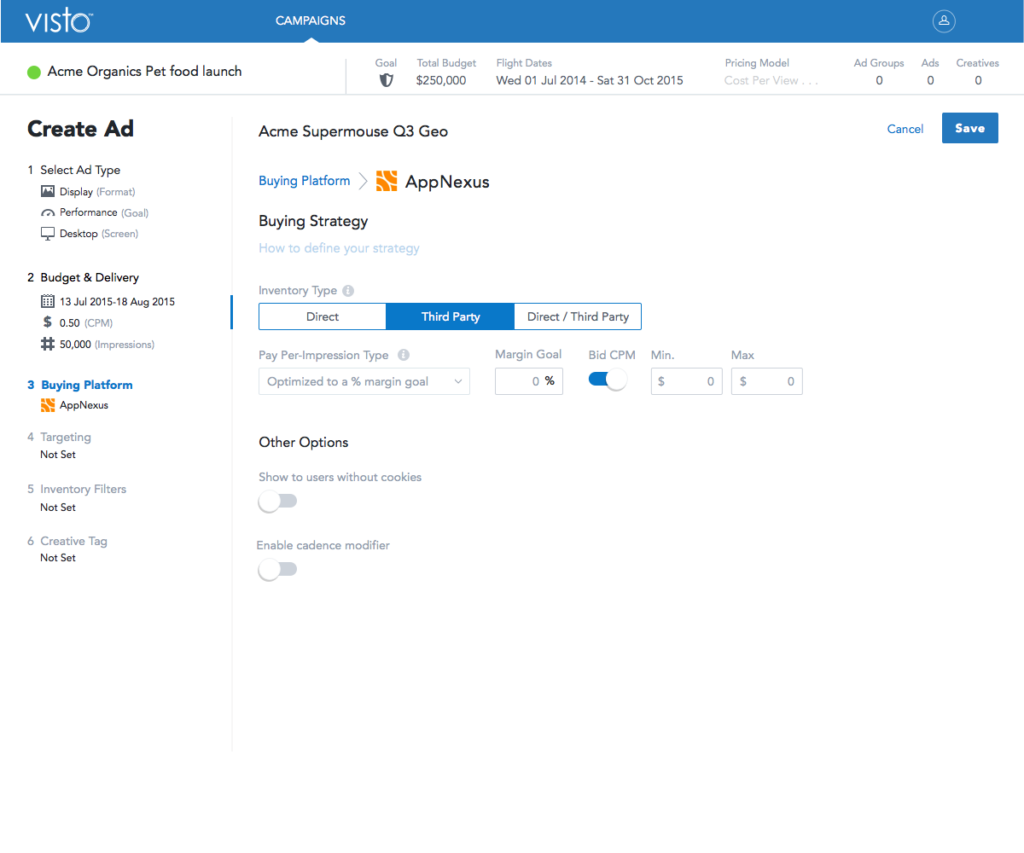
Create Ad - select platform
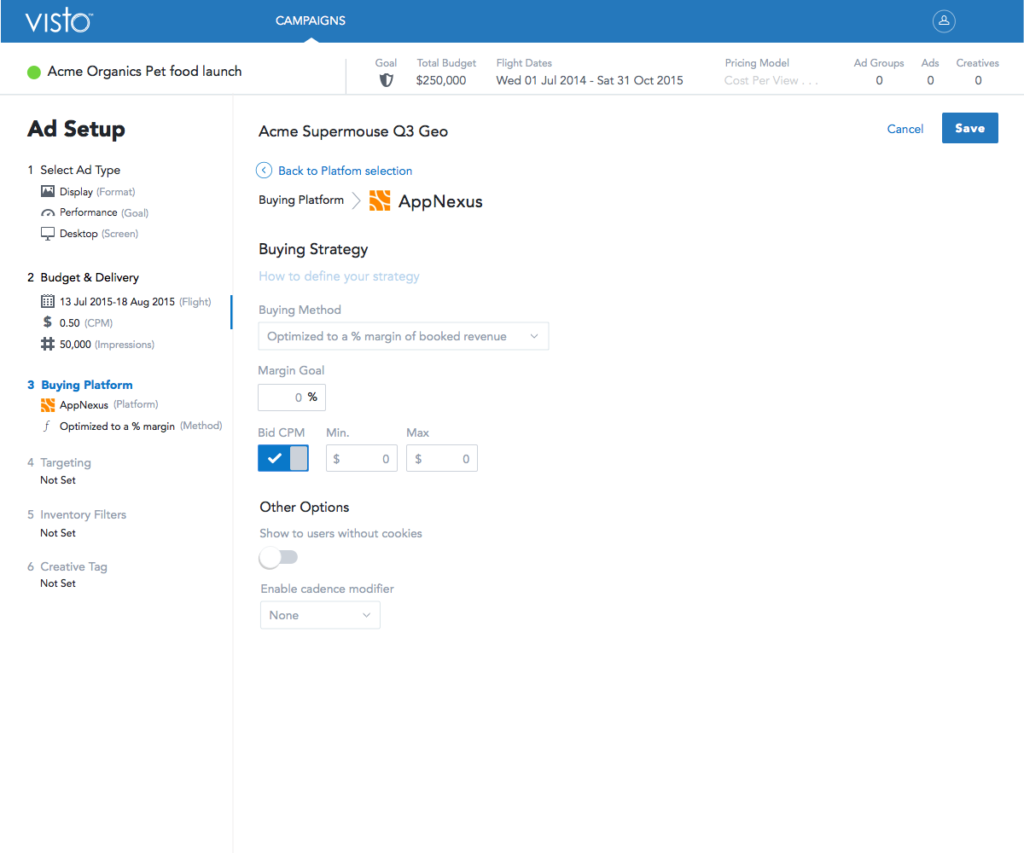
Create Ad - setup platform
Updated workflow (Wireframe)
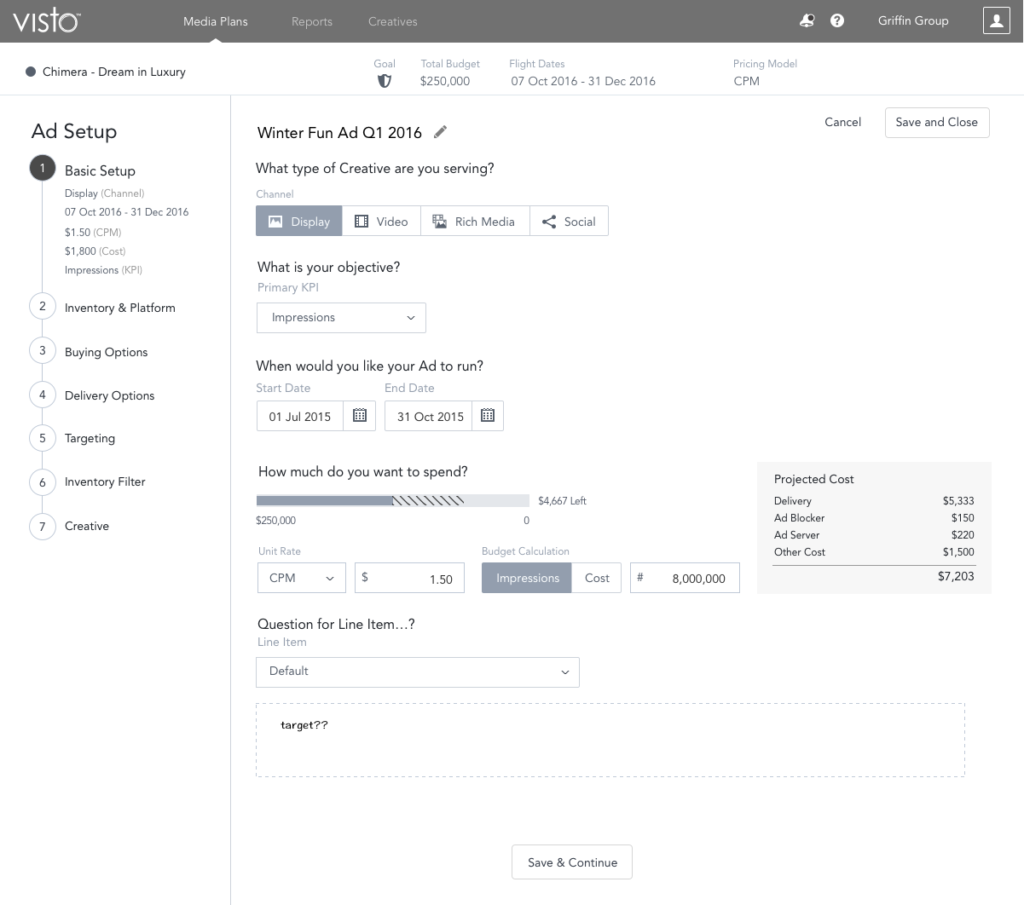
Step 1
Step 2
End
Creative Library
Challenges
Managing ad assets was difficult due to the fragmented and platform-specific requirements across buying channels. Each platform imposed different formats, sizes, and rules, creating friction and increasing the cognitive load for Ad Ops teams responsible for organizing, validating, and reusing creatives.
The core challenge was information prioritization and findability:
What is the minimum set of metadata users need to quickly understand and evaluate an asset?
How should assets be organized so users can reliably find the right creative at the right moment?
To address this, we focused on surfacing a concise, high-signal summary for each asset—such as name, format, size, date, and target platform—while supporting flexible organization by platform, campaign, or ad type. Robust search and filtering enabled fast retrieval, and clear guidance on platform-specific requirements reduced errors during upload and reuse.
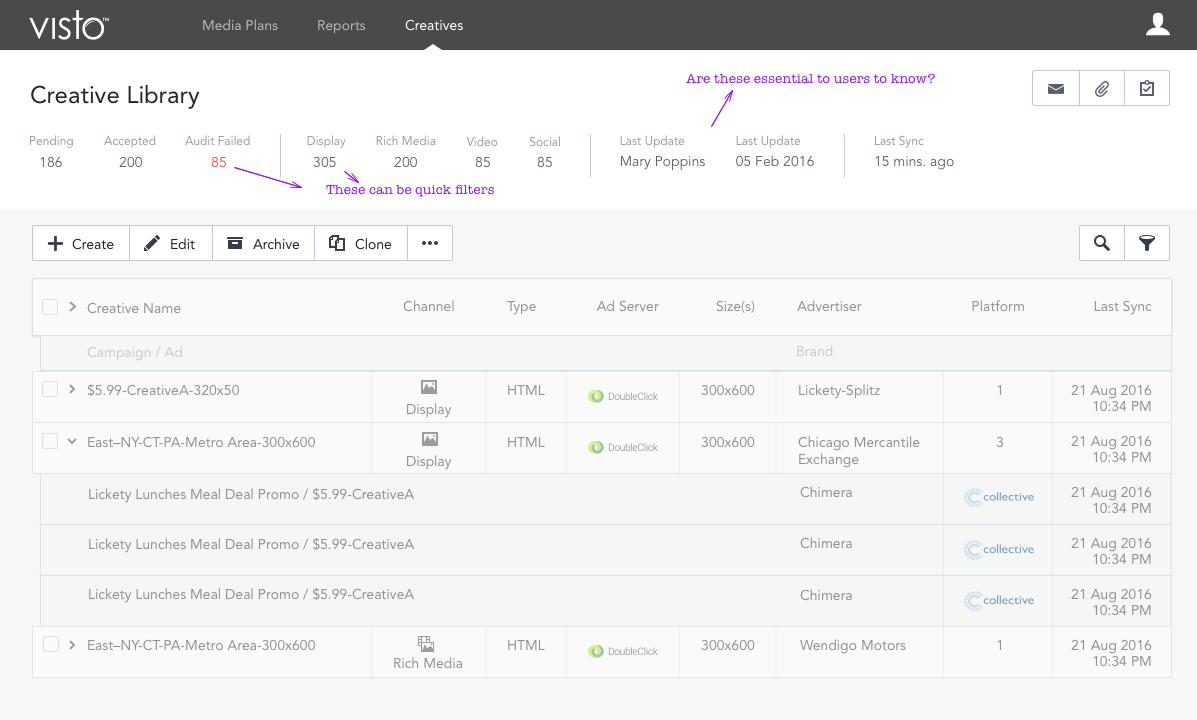
Wireframe
Ad campaign hub
Challenges
Ad Ops teams need to quickly understand the state of their campaigns, what is live, what has completed, and what is upcoming, while also identifying which campaigns are over- or under-performing. Without a consolidated view, this information was fragmented across tools, making it difficult to act quickly as time and budget pressures increased.
The core challenge was situational awareness at scale:
How do we provide an at-a-glance view of campaign status and health?
How do we enable fast diagnosis and optimization without forcing users to dig through reports?
To address this, we designed a centralized campaign hub that surfaces real-time performance data alongside clear status indicators. Key metrics such as impressions, click-through rate, conversions, and cost per acquisition are organized by campaign, ad set, and creative, allowing Ad Ops teams to quickly assess performance, identify issues, and take action with confidence.
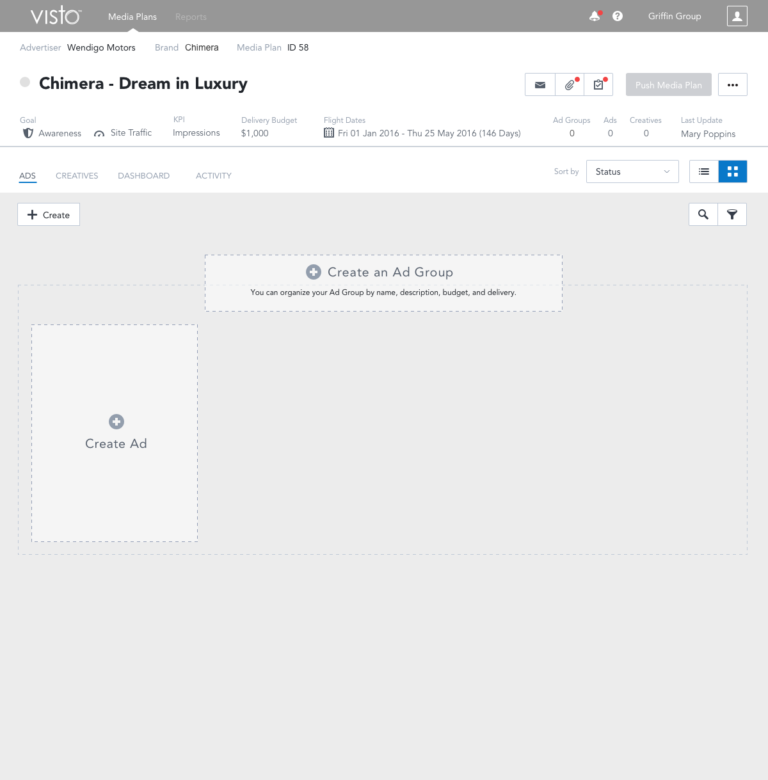
Empty State
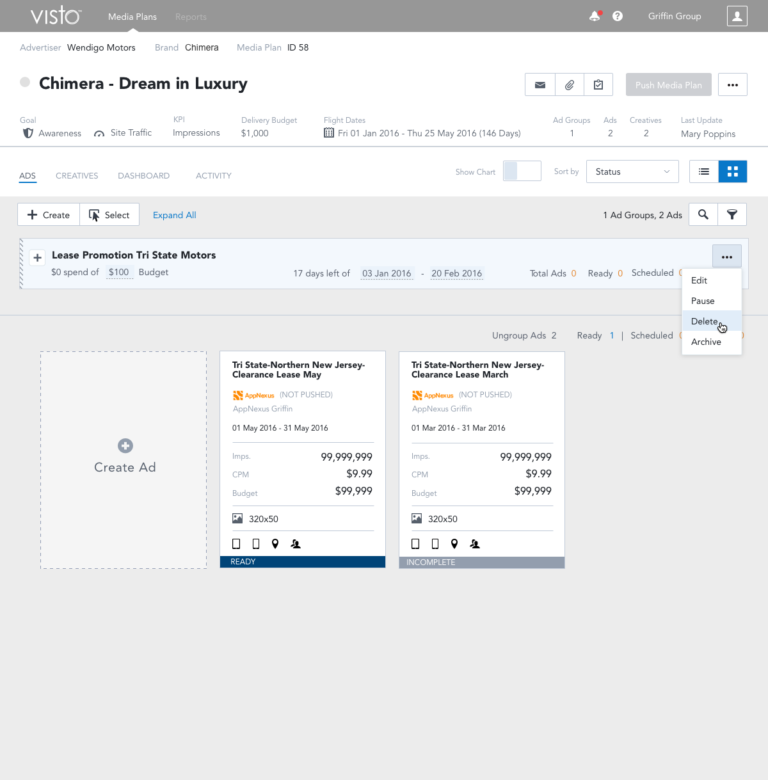
Default
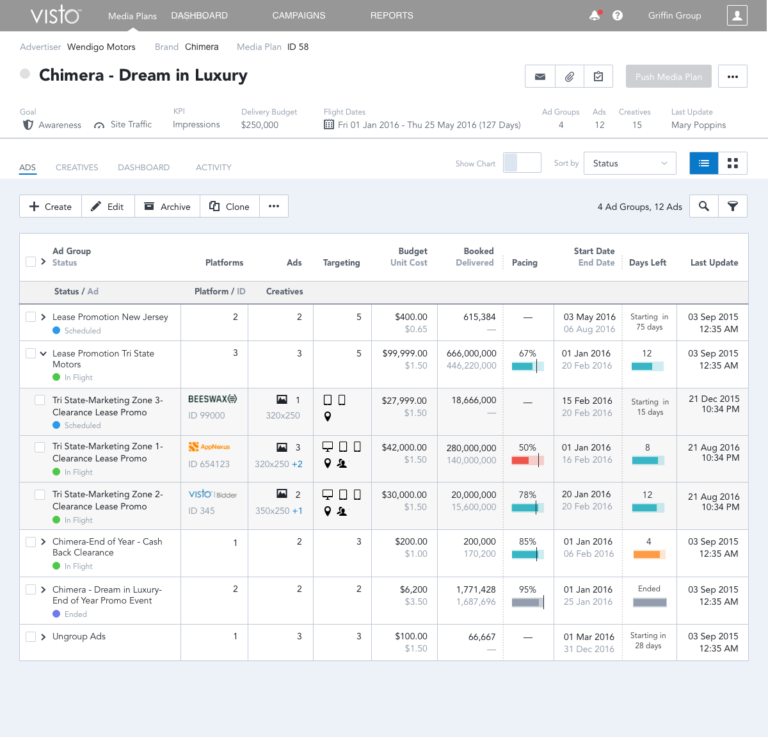
List View
Real-time reporting
Challenges
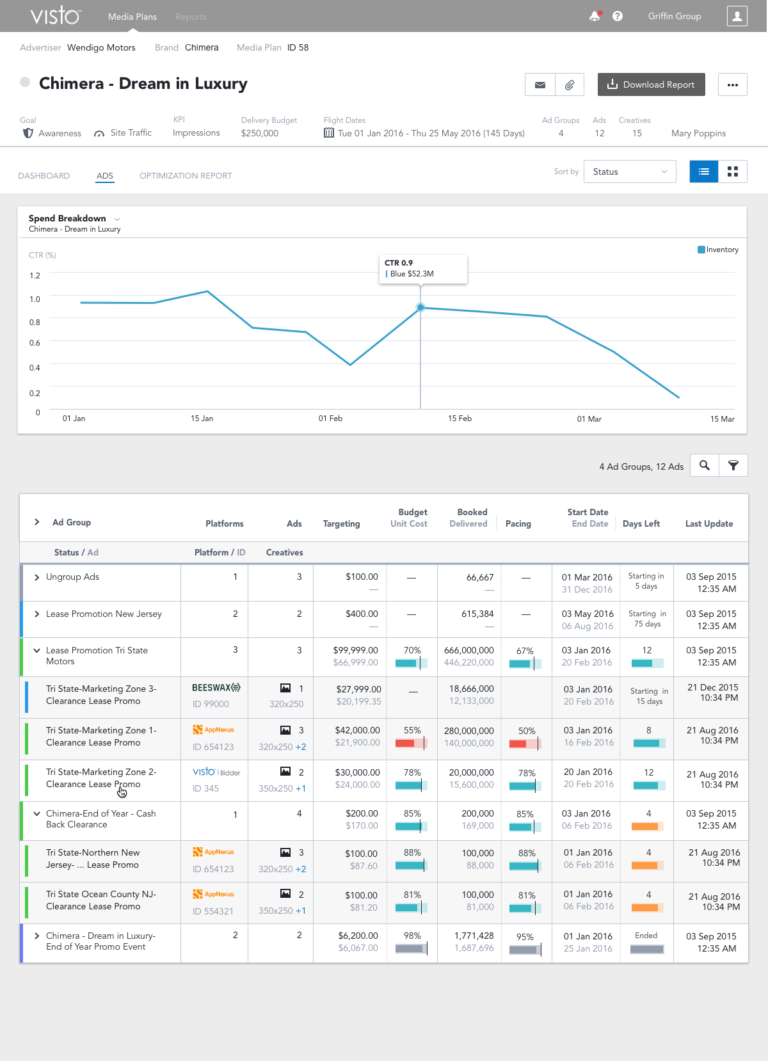
Ad Ops teams need to identify underperforming campaigns quickly, as ad buying is constrained by time and budget. Without clear visibility, it becomes difficult to understand where spend is going, how performance is trending, and which actions will have the greatest impact.
The challenge was to provide real-time insight without overwhelming users. Reporting needed to deliver a high-level snapshot of budget allocation and performance over time, while still allowing teams to drill into individual ads and creatives when deeper analysis was required. This balance was critical to helping Ad Ops teams make informed optimization decisions and improve the effectiveness of their ad delivery.
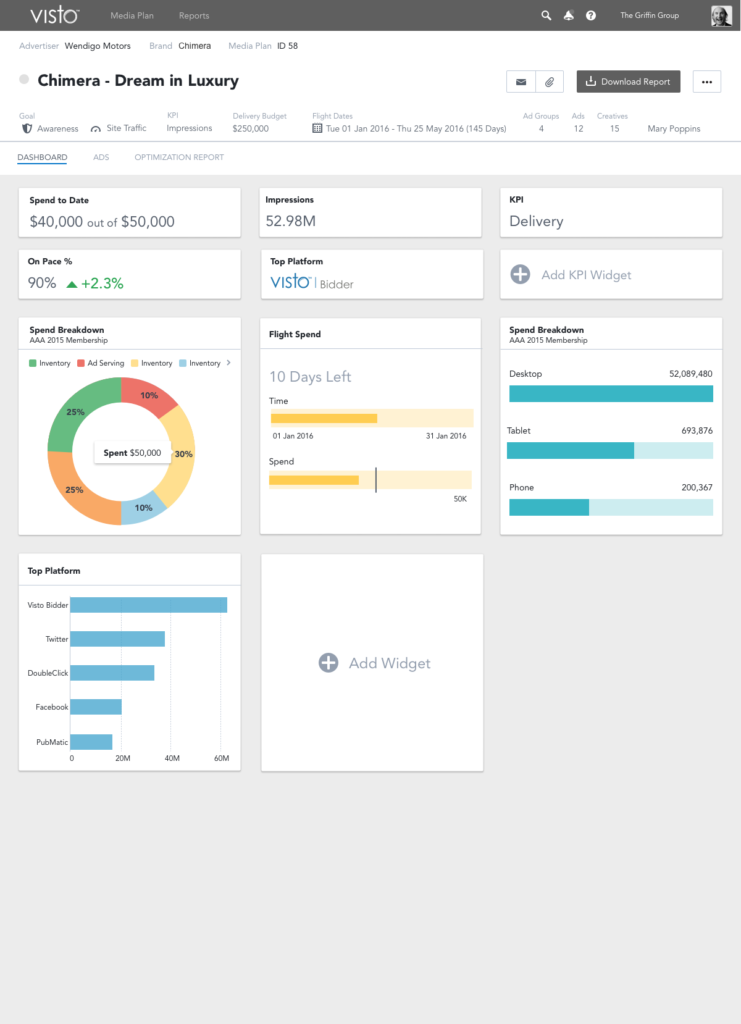
Dashboard
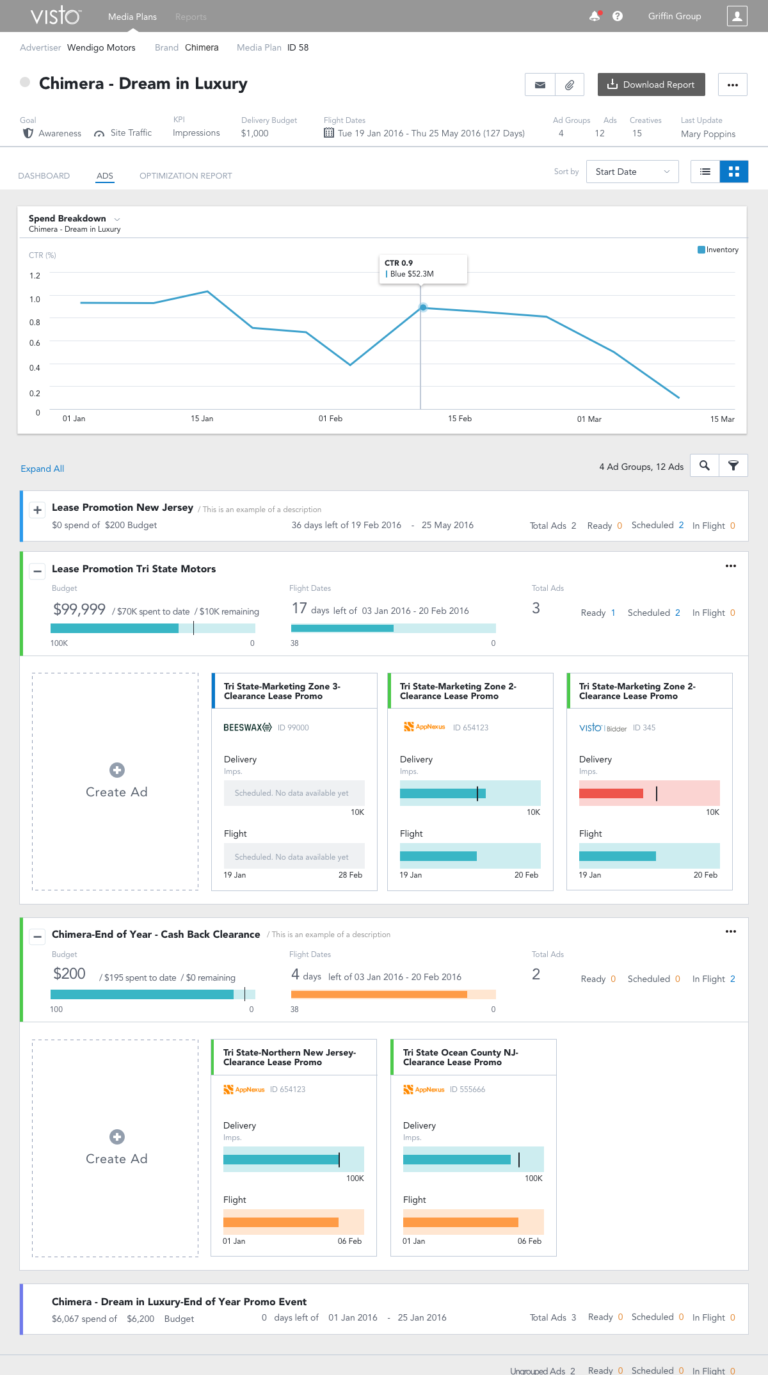
Snapshot
Details
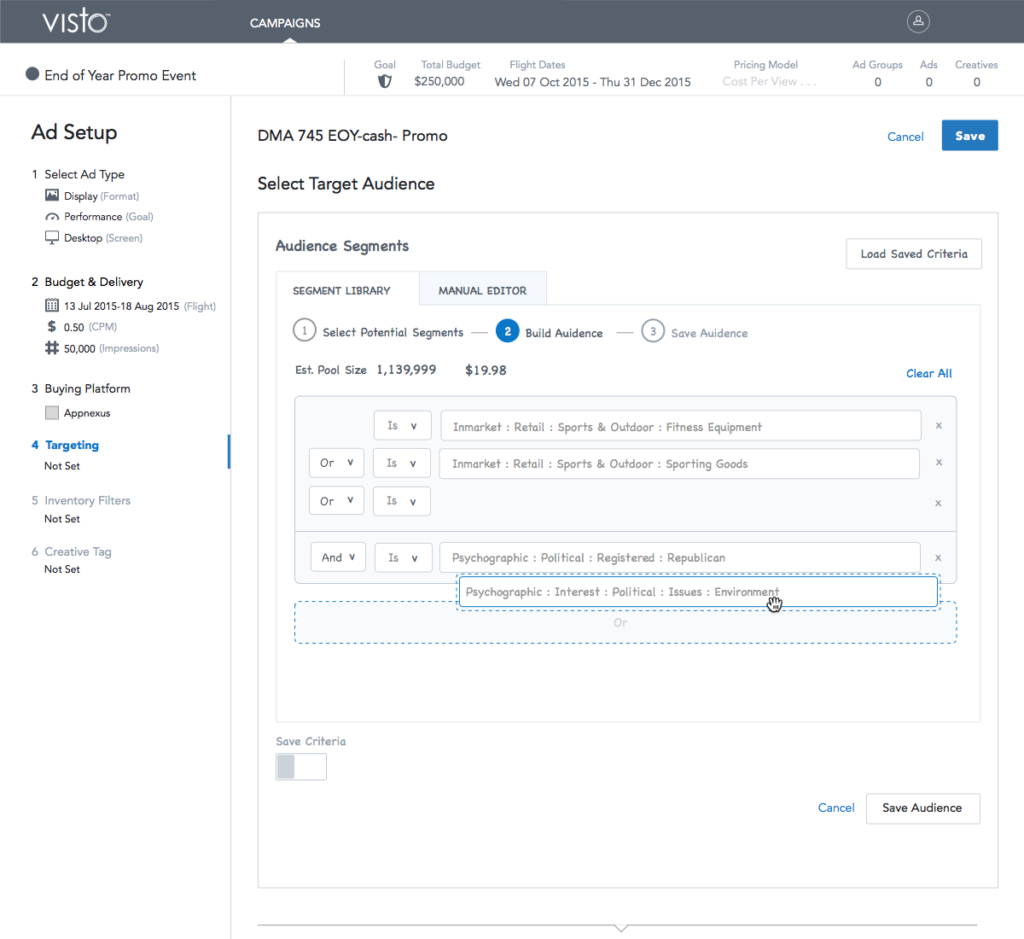
Targeting — Rule Builder
Challenges
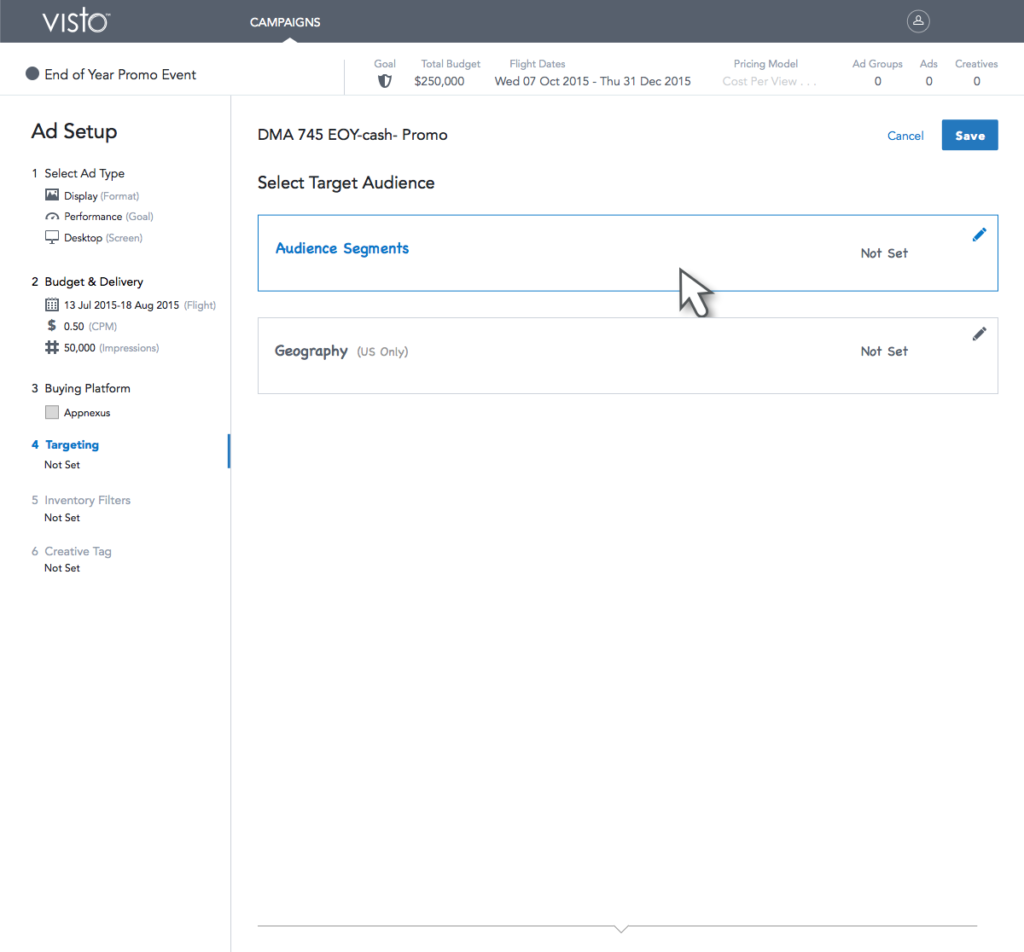
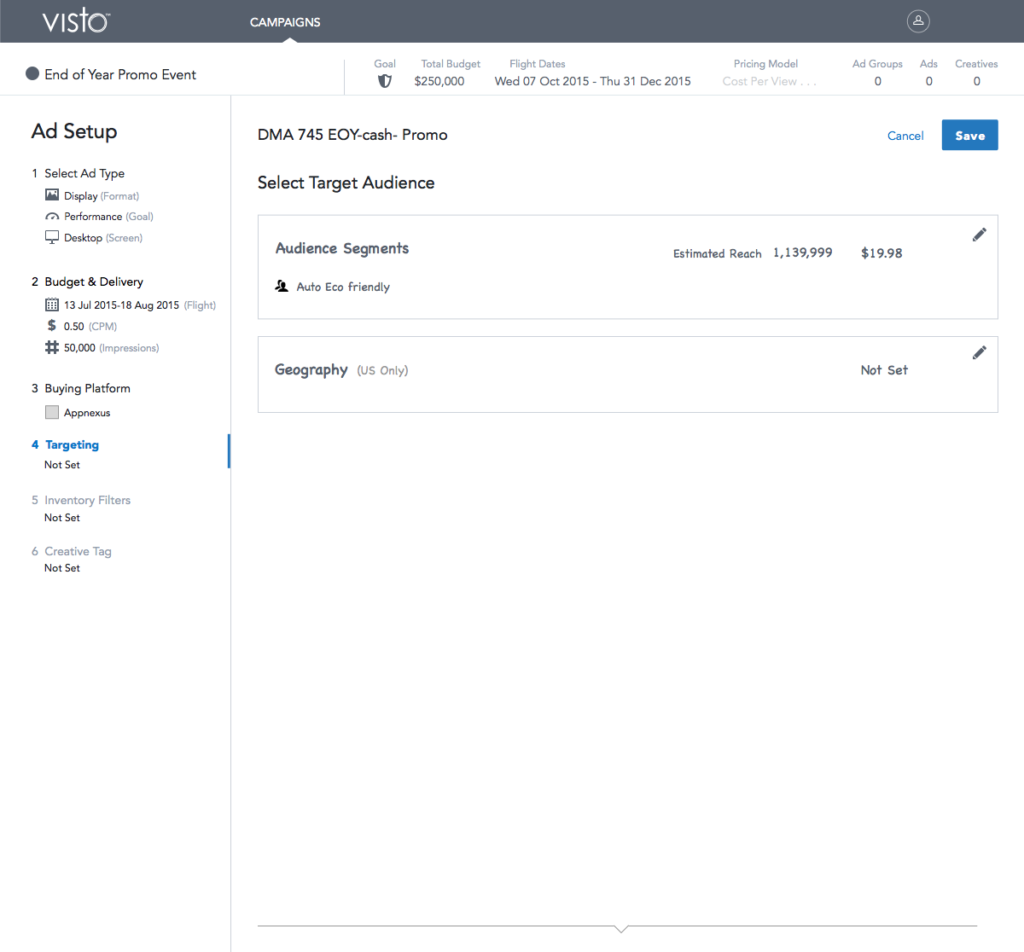
Targeting setup varies widely across buying platforms, with each platform supporting different rules, constraints, and levels of granularity. This inconsistency forces Ad Ops teams to relearn targeting logic and increases the risk of errors during campaign setup.
The core challenge was balancing standardization and control:
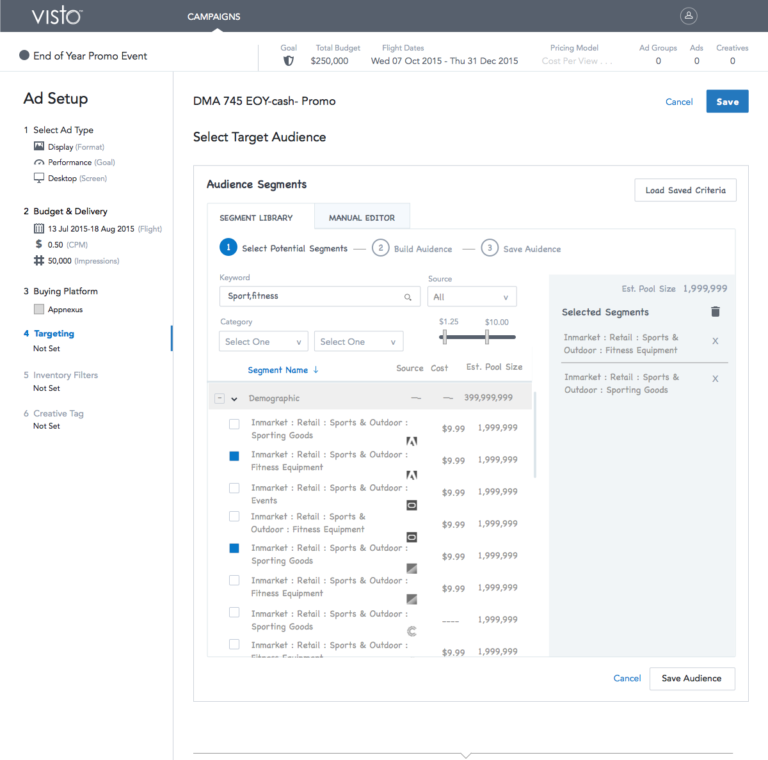
How can we unify the most common targeting options into a single, predictable setup flow?
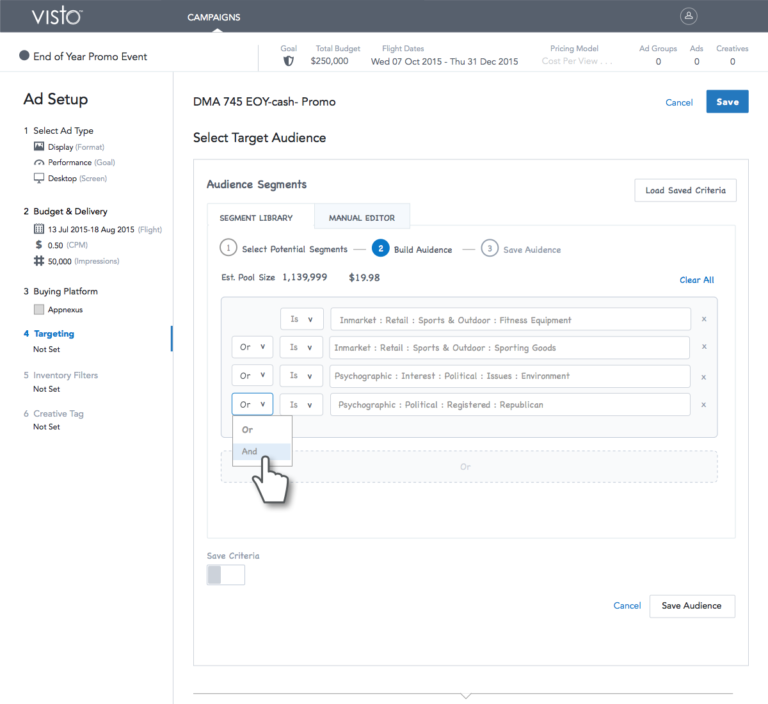
How can we support advanced, platform-specific targeting without overwhelming users who only need the basics?
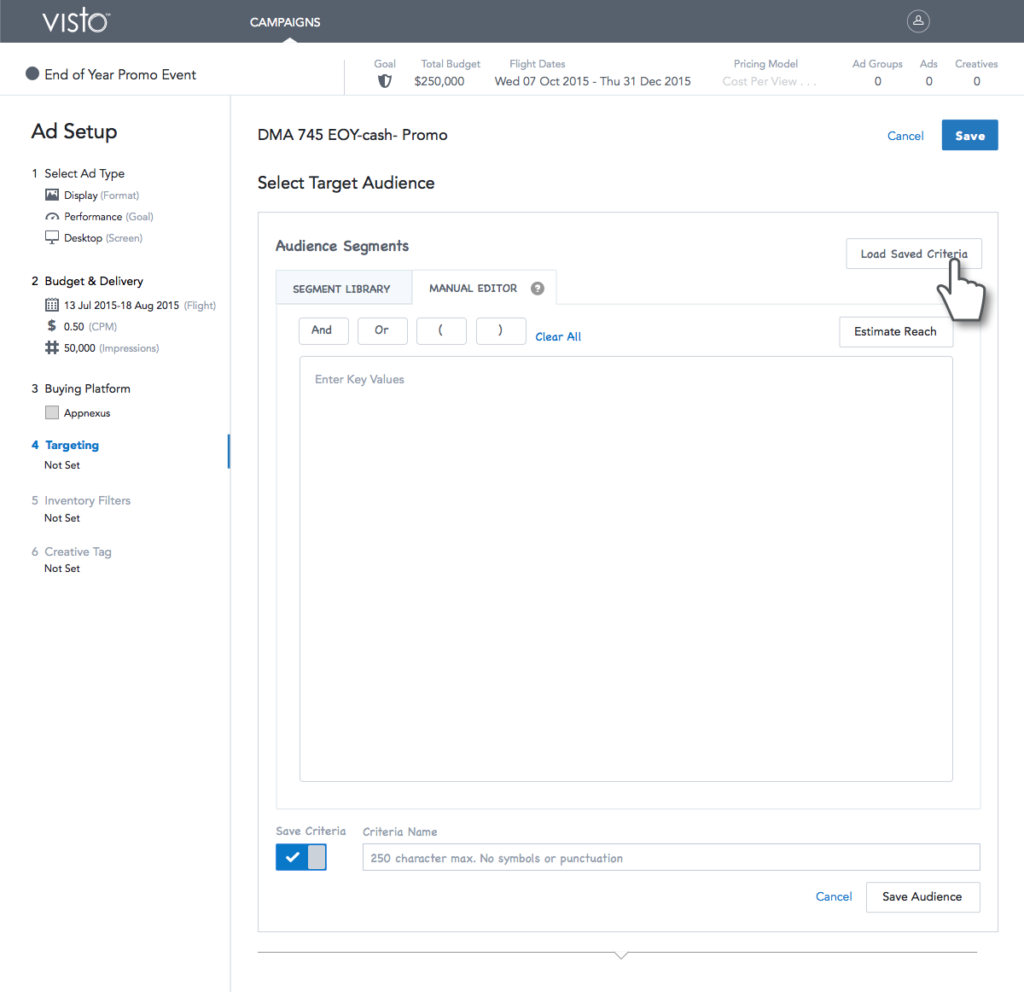
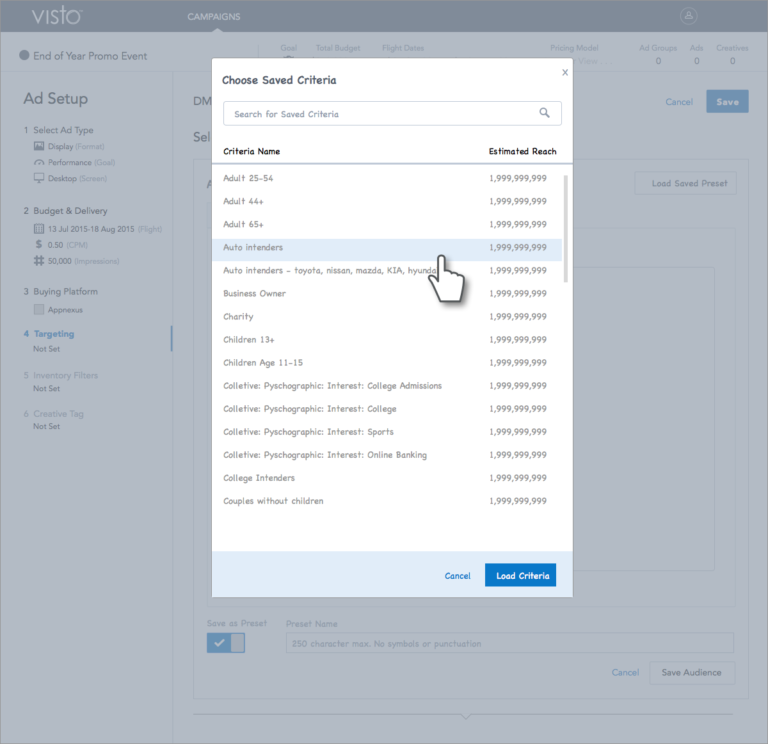
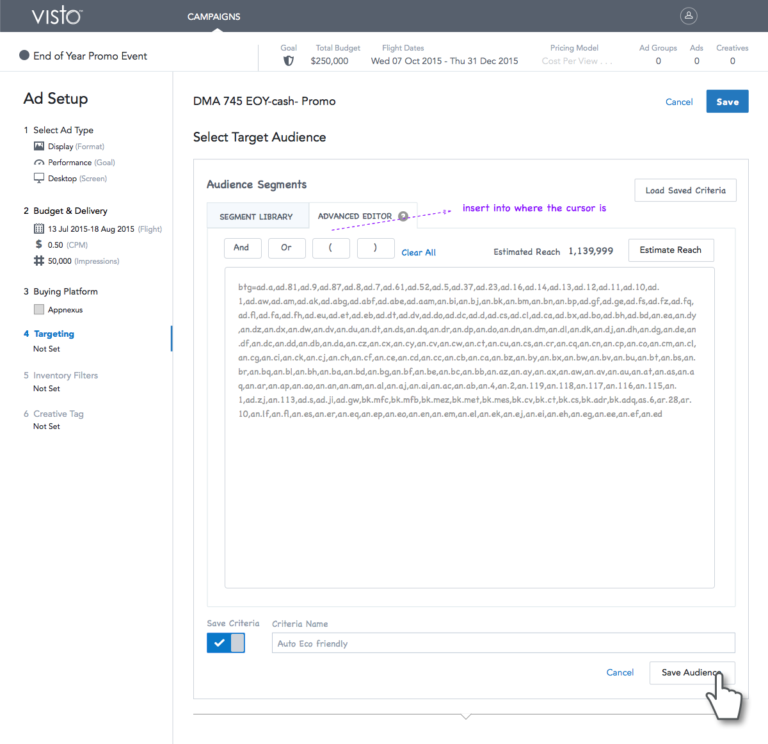
To address this, we identified shared targeting patterns across platforms and established sensible defaults for the most common use cases. Platform-specific rules are revealed progressively based on the selected channel, allowing Ad Ops teams to configure granular targeting only when needed while maintaining a streamlined and consistent setup experience.
Targeting UX
Image
Image
Image
Image
Image
Image
Image
Image
Closing Thought
Designing Visto required more than simplifying interfaces. It required rethinking how fragmented systems could work together in a way that felt coherent, predictable, and efficient for the people operating them every day. By focusing on shared patterns, clear defaults, and progressive complexity, we transformed a scattered ad tech workflow into a unified platform that helped Ad Ops teams move faster, make better decisions, and operate with confidence at scale.